The Suicide of the Young Woman on the Pont Royal
The Suicide of the Young Woman on the Pont Royal is the hidden wound at the center of Jean-Baptiste Clamence's confession, the moment that exposes the hollowness of his carefully constructed virtue and sets him on the path to becoming a judge-penitent. It is an event he cannot forget yet refuses to act upon, a failure of responsibility that echoes through the rest of his life and defines his subsequent philosophy of universal guilt.
The Night of the Fall
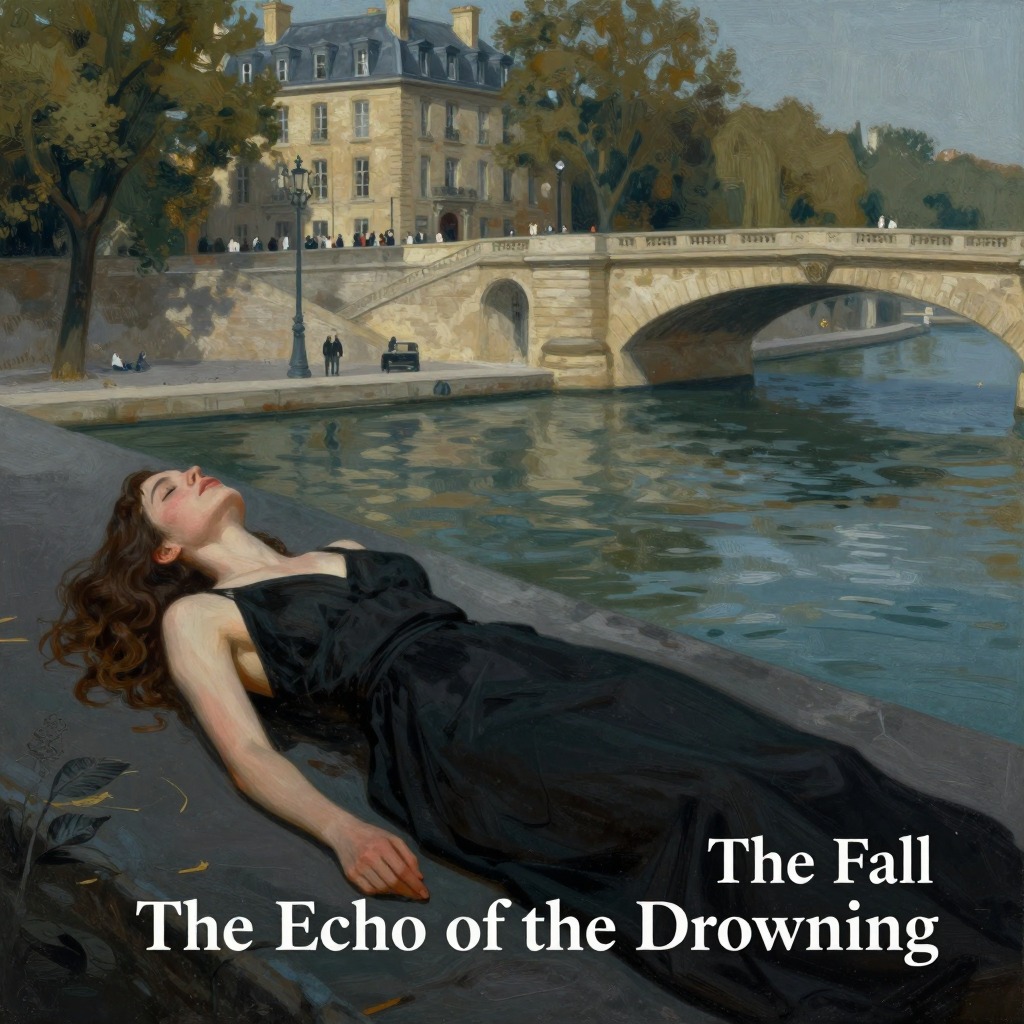
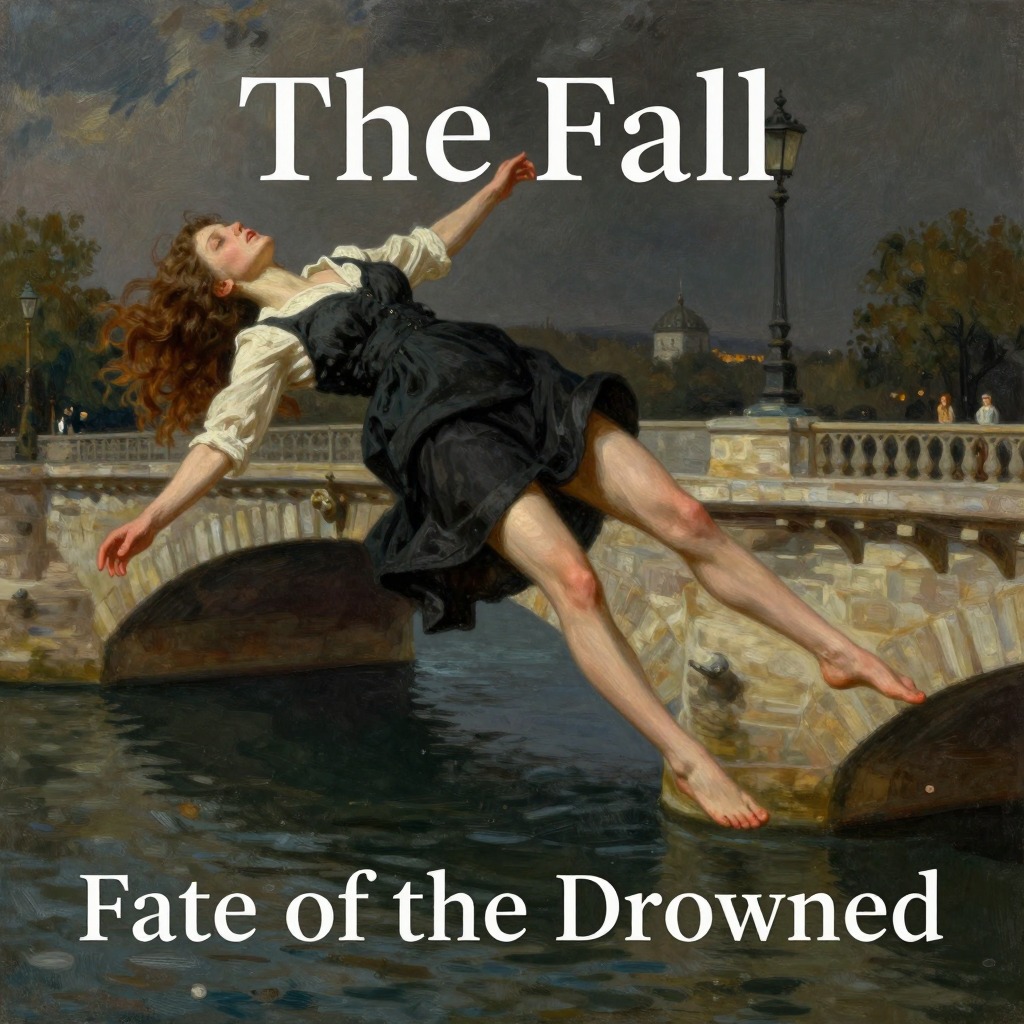
Two or three years before the evening on the Pont des Arts when he heard the mysterious laugh, Clamence was returning home to the Left Bank across the Pont Royal shortly after midnight. A fine drizzle was falling, scattering the few pedestrians. He had just left a mistress, who was surely already asleep, and was enjoying the walk, his body calmed and irrigated by a gentle flow of blood. On the bridge he passed behind a figure leaning over the railing, staring at the river. On closer view, he made out a slim young woman dressed in black. The back of her neck, cool and damp between her dark hair and coat collar, stirred him. But after a moment's hesitation, he went on. At the end of the bridge he followed the quays toward Saint-Michel, where he lived. He had already gone some fifty yards when he heard the sound—which, despite the distance, seemed dreadfully loud in the midnight silence—of a body striking the water. Almost at once he heard a cry, repeated several times, which was going downstream; then it suddenly ceased. The silence that followed, as the night suddenly stood still, seemed interminable. He wanted to run and yet did not stir. He was trembling, he believes from cold and shock. He told himself that he had to be quick and felt an irresistible weakness steal over him. He has forgotten what he thought then—"Too late, too far …" or something of the sort. He stood motionless, still listening. Then, slowly under the rain, he went away. He informed no one. The next day, and the days following, he did not read the papers.
The Unacknowledged Guilt
Clamence never directly acknowledges the woman's death as his responsibility, yet the event becomes the secret reference point for his entire subsequent life. The cry he heard that night did not cease; it traveled, he later realized, from the Seine to the waters of the Channel and across the limitless expanse of the ocean, waiting for him until the day he encountered it again on an ocean liner. He understood that it would continue to await him on seas and rivers everywhere, in the bitter water of his baptism. The event reveals the fundamental duplicity of his nature: the same man who rushed to help blind people cross streets, who gave alms and defended widows and orphans, who prided himself on his courtesy and generosity, walked away from a drowning woman without a word. The contradiction between his public virtue and his private failure becomes unbearable. He begins to see that his entire life has been a performance, that his modesty helped him to shine, his humility to conquer, and his virtue to oppress. The suicide exposes the lie at the heart of his identity.
The Collapse of the Self
The memory of the woman on the bridge, combined with the laugh he heard on the Pont des Arts, initiates a slow disintegration of Clamence's carefully maintained self-regard. He ceases to walk along the Paris quays; when he rides along them in a car or bus, a sort of silence descends on him. He is waiting, he believes, but nothing happens. He develops health problems—a dejection, a difficulty in recovering his good spirits. Life becomes less easy; he feels he is half unlearning how to live. The thought of death bursts into his daily life. He measures the years separating him from his end and is tormented by the thought that he might not have time to accomplish his task—though he has no idea what that task is. A ridiculous fear pursues him: one could not die without having confessed all one's lies. The suicide becomes the unconfessed lie that makes death definitive, the secret that would be murdered if he were to die without revealing it.
The Echo Across the World
Years later, on an ocean liner, Clamence perceives a black speck on the steel-gray ocean. He turns away at once, his heart beating wildly. When he forces himself to look, the speck has disappeared. He is on the point of shouting, of stupidly calling for help, when he sees it again—it is only a bit of refuse that ships leave behind. But he realizes then, calmly as one resigns oneself to an idea whose truth one has long known, that the cry which had sounded over the Seine behind him years before had never ceased. It had been carried by the river to the waters of the Channel, to travel throughout the world, and it had waited for him there until the day he encountered it. The event is not past; it is permanently present, a perpetual accusation. It forces him to submit and admit his guilt, to live in what he calls the little-ease—a cell not high enough to stand in nor wide enough to lie down in, where one must live on the diagonal. The suicide of the young woman becomes the model for all the failures of responsibility that Clamence will later universalize into a doctrine of universal guilt.
The Final Confrontation
At the end of his confession, Clamence turns to his listener—a Parisian lawyer—and asks him to utter the words that have never ceased echoing through his nights: "O young woman, throw yourself into the water again so that I may a second time have the chance of saving both of us!" He recognizes that the listener, too, has his own story on the quays of the Seine, his own failure to risk his life. The event is not unique to Clamence; it is the universal human failure to act when action is required. But Clamence knows it is too late now. It will always be too late. The suicide of the young woman on the Pont Royal is the original sin of his personal mythology, the moment that proves every man is guilty and that innocence is a fiction. It is the foundation on which he builds his entire profession of judge-penitent, the secret that allows him to condemn everyone because he has first condemned himself.